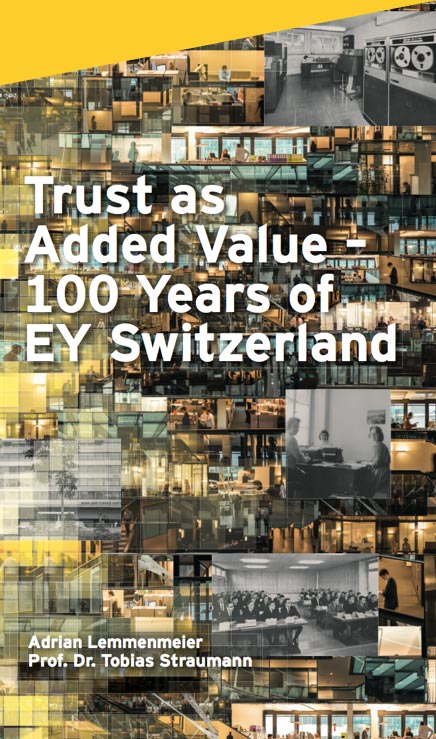



Milestones
EY Switzerland

100

100 Years of
EY Switzerland

Start journey

Chapter 1

triangle
triangle
1

How It All Began

The story begins on 12 March 1917, in the midst of World War I, one day after mutiny broke out among Russian soldiers in Petro-grad and Baghdad was captured by British troops. On that Monday, Basler Handelsbank (BHB) founded a company called Verwaltungs-, Revisions- und Treuhand AG, with its registered office in Basel.4 From these modest origins, following multiple mutations and mergers, EY Switzerland as we know it today came into being.

continue
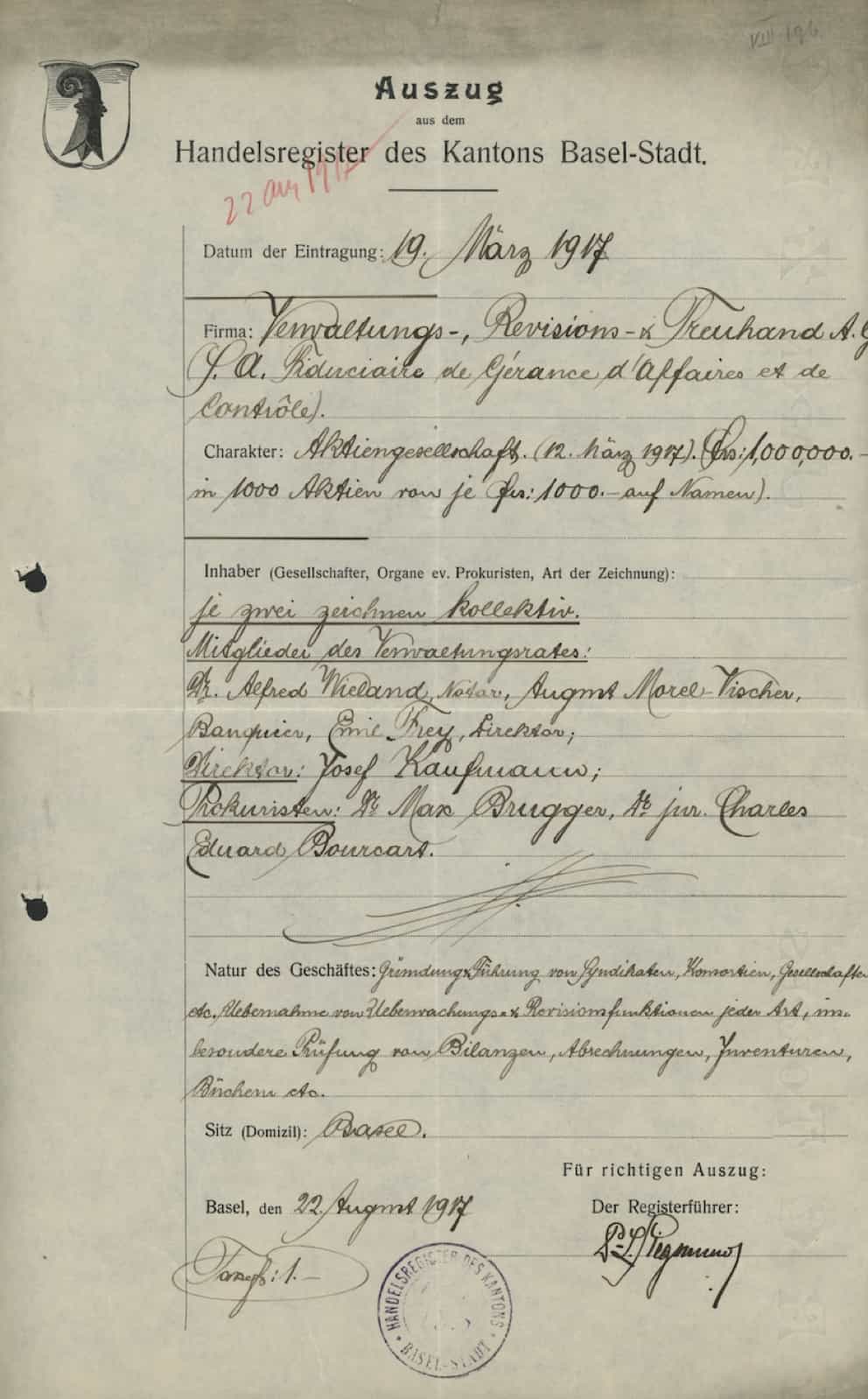

First entry in the Commercial Register

First entry of Verwaltungs-, Revisions- und Treuhand AG in the Commercial Register of the Canton of Basel-Stadt.

Chapter 2

triangle
triangle triangle
2

Crisis, War and Buy-Out

Just ten years after the end of World War I, the worst economic crisis of modern times took hold. In Germany and the United States, the world’s two largest economies, unemployment peaked at over 20 percent in 1932. Banks collapsed, currencies depreciated dramatically, tariff barriers were erected and international trade imploded. In 1932, the British historian Arnold Toynbee wrote that, for the first time, men and women across the globe were openly discussing “whether the western social system would fall apart”. Switzerland was rocked by the global turbulence. Exports plummeted by 50 percent, and several large banks were brought to the brink of bankruptcy; the crisis looked like it would never end, resulting in record-high rates of unemployment. The Swiss government and the Swiss National Bank had to ward off a collapse in order to prevent a systemic banking crisis. Only when the Swiss franc started to depreciate in autumn 1936 did the storm clouds begin to disperse.

continue
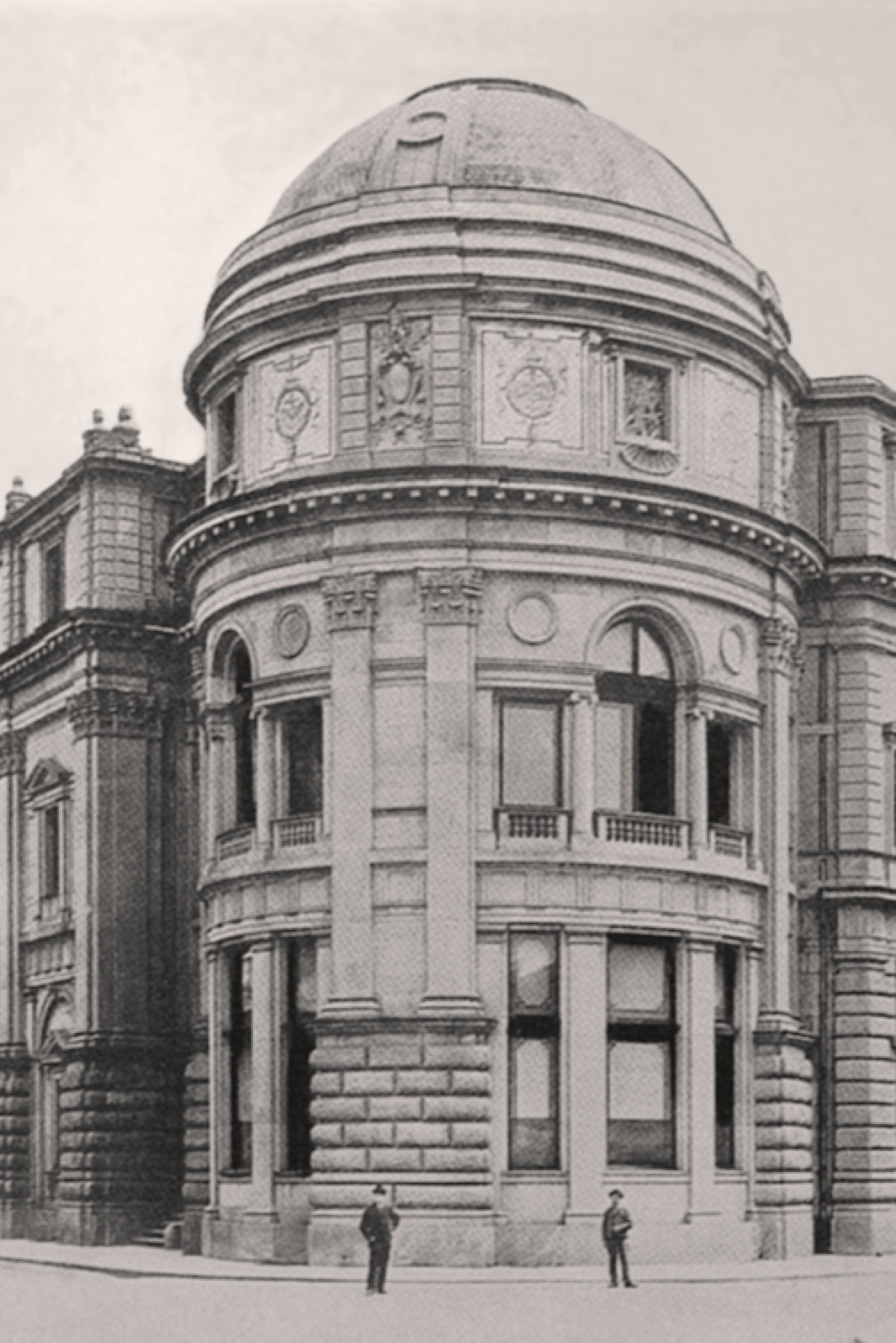
Bahnhofstrasse 3

From 1932 to 1968, ATAG in Zurich was housed in the old stock exchange building at Bahnhofstrasse 3.

Chapter 3

triangle
triangle triangle
3

Sturm und Drang

The disaster of World War II was, quite unexpectedly, followed by an extended period of prosperity. It was as if Europe was finally being compensated for the hardships and sacrifices of its many wars and crises. Average income increased four-fold within the space of just thirty years – a historic record. Globally, too, the “Trente Glorieuses”, as the boom from 1945 to 1975 was known, was like nothing seen before. Both the planned economy of the Soviet Union and the former colonies of Asia and Africa saw unprecedented levels of growth. Some countries, specifically Japan, South Korea and Taiwan, also managed to catch up with the rich western industrial nations. By the mid-1970s, the world had changed utterly from what it had been in 1945.

continue
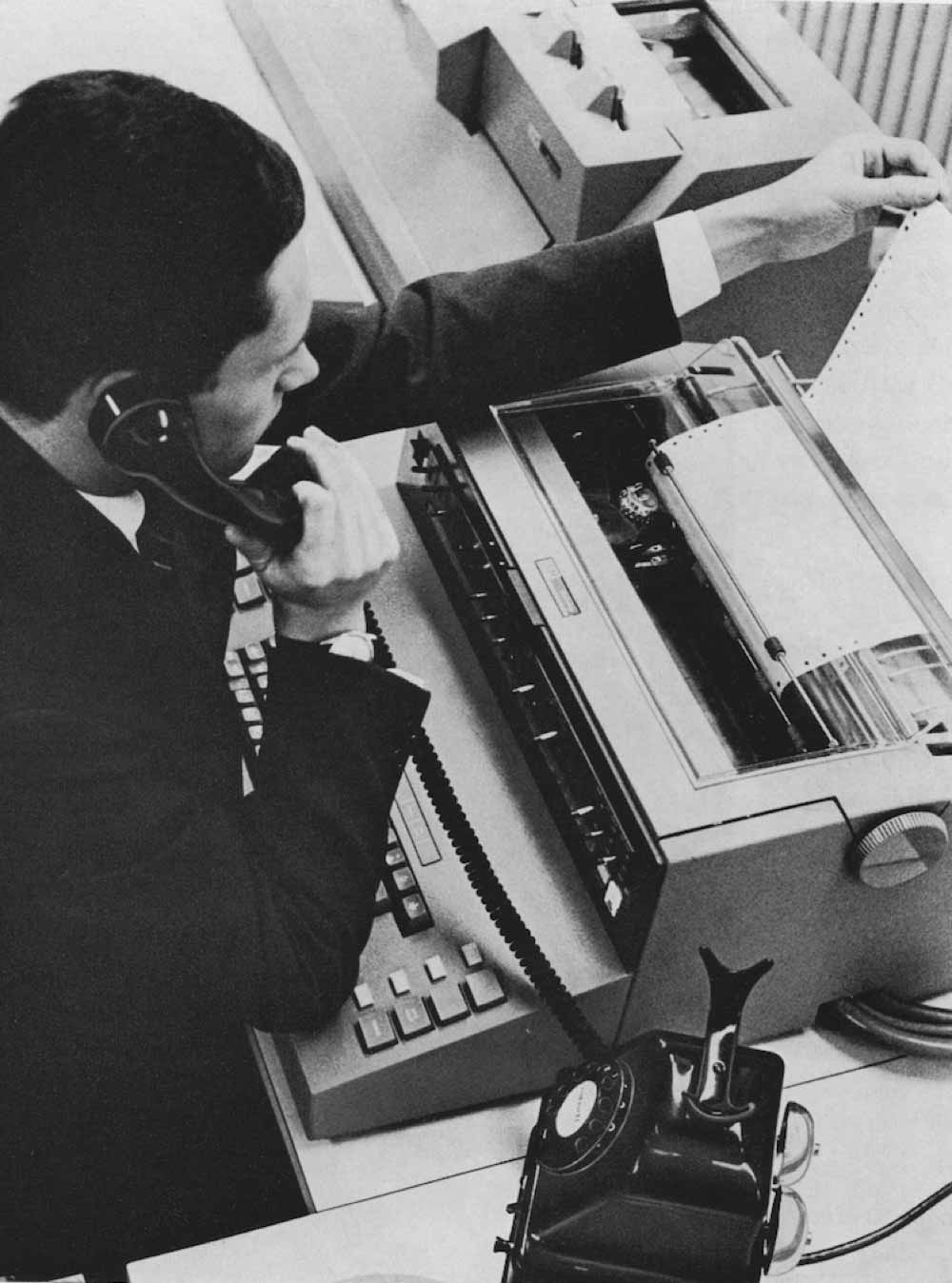
Work on IBM 1050

Work on IBM 1050, a machine for transmitting data, 1963.

Chapter 4

triangle
triangle triangle
4

In the Wake of Global­isation

The 1980s saw the global econ­omy gripped by a new wave of globalisation. The dismantling of tariff barriers, the liberalisation of capital movements and technological innovations made the earth flatter than ever before. In 1980, the share of global trade in gross national product was 39 percent; twenty years later it was 52 percent. The daily forex trading volume increased from $ 70 billion to $ 1.5 trillion. The capit­alisation of the world’s listed companies rose from less than $ 5 trillion to over $ 30 trillion.

continue
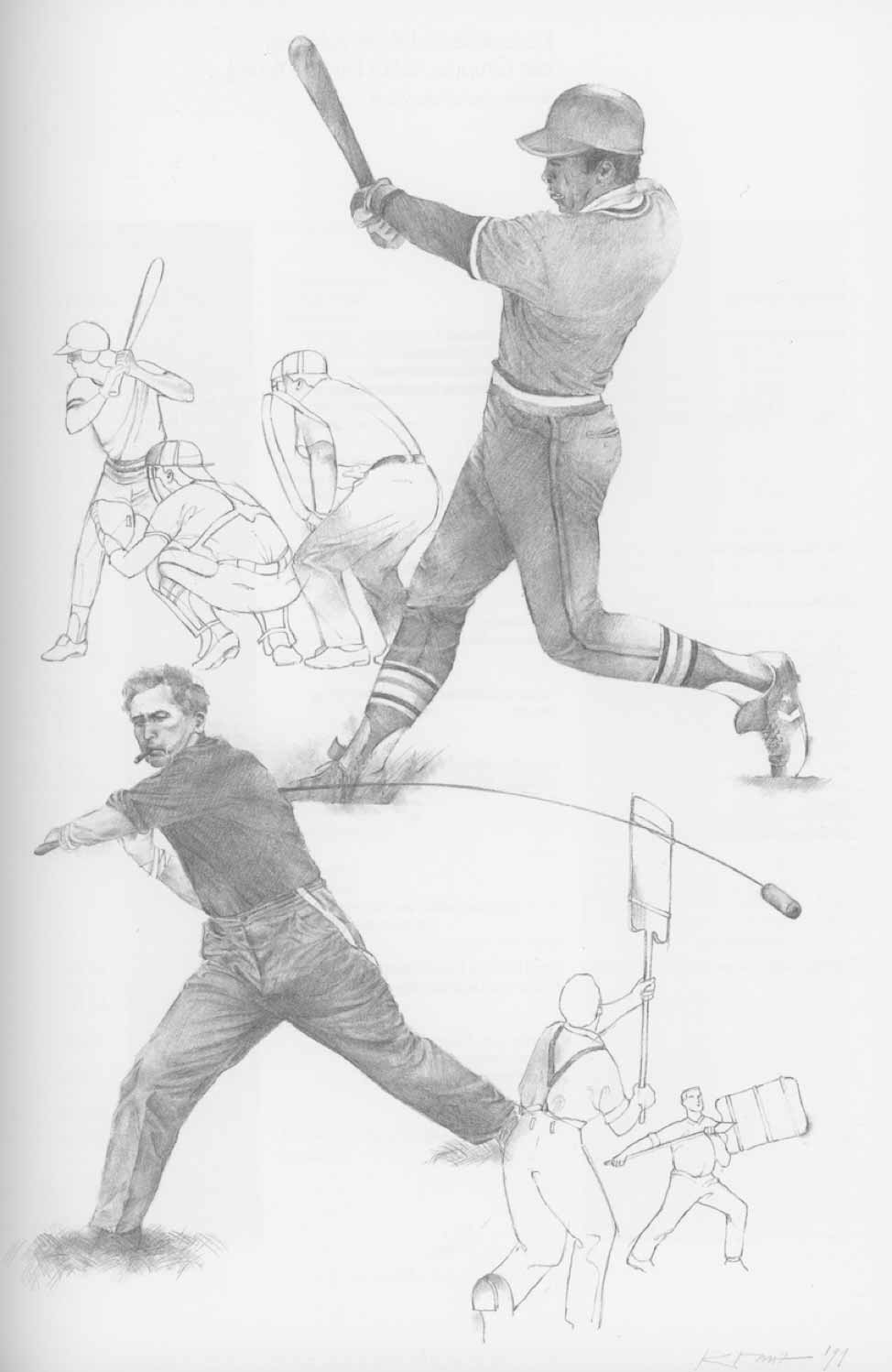
Hornussen meets baseball

Hornussen meets baseball. Upon joining Ernst & Young Inter- national, ATAG uses its review of the 1990 financial year to underscore its international focus.

Chapter 5

triangle
triangle triangle
5

Volatility and Growth

The 21st century got off to a dramatic start – with the stock market crash from 2000 to 2002, the terrorist attacks of 11 September 2001 and two military interventions in the Middle East. In Switzerland, the grounding of the Swissair Group in October 2001 reverberated throughout the worlds of politics and industry. Nevertheless, the trend towards global economic integration continued unabated. December 2001 saw China join the World Trade Organisation. The share of world trade in global economic output increased further, while the national capital markets gradually merged to form a single platform. The earth was getting flatter and flatter.

continue
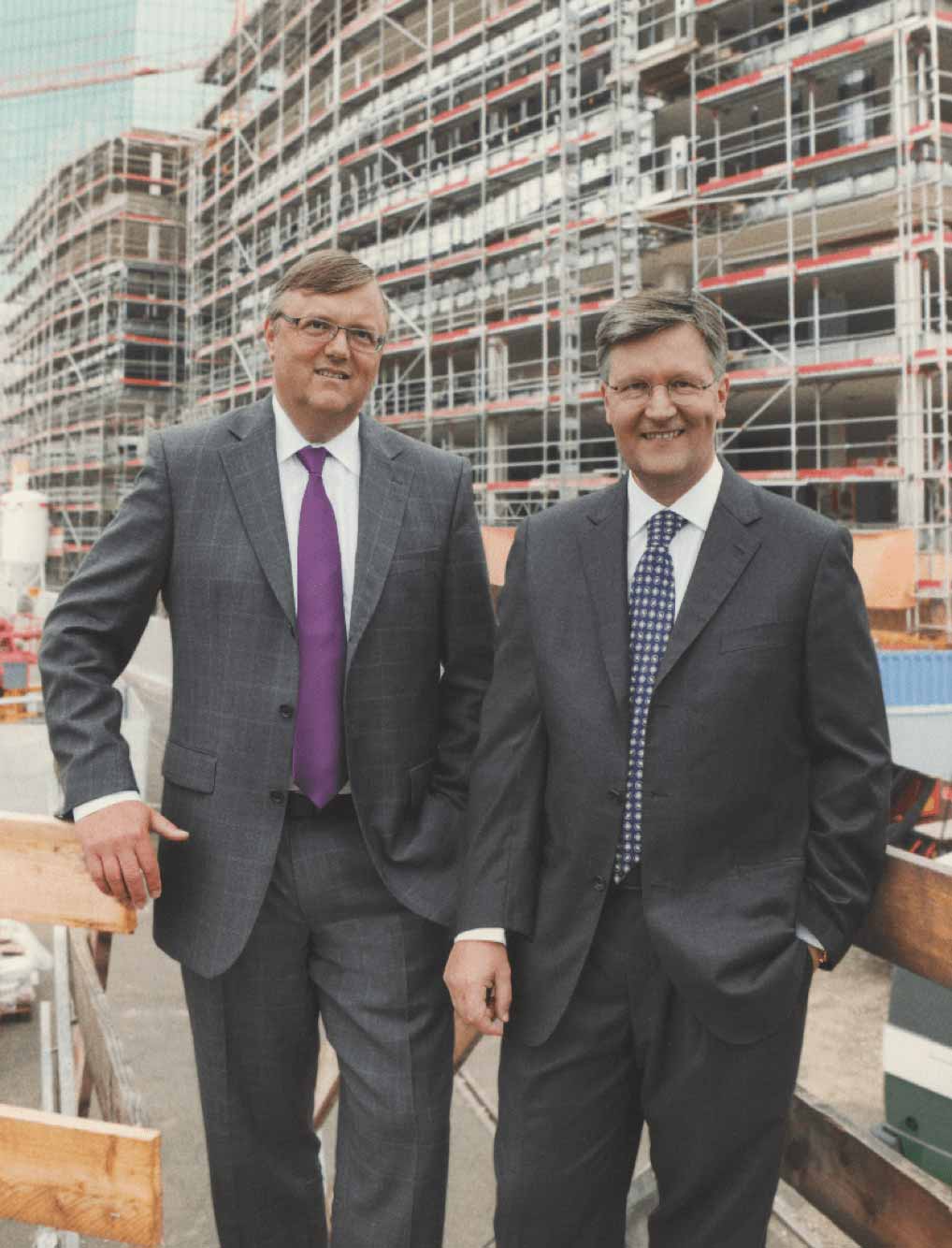
T.Stenz & B.Chiomiento

Bruno Chiomento (CEO, 2009–2016) and Thomas Stenz (Chairman of the Board of Directors, 2009–2014) in front of the “platform” in 2010.

Thank you.

triangle
triangle triangle

Imprint

  • Publisher

    Ernst & Young AG

  • Authors

    Adrian Lemmenmeier, Prof. Dr. Tobias Straumann

  • Project Management

    Jacqueline Leichsering

  • Concept and Design

    Tanja Martin

  • Proofreading

    Textschiff – Christina Bösel

  • Images

    EY Archive Switzerland
    Cover: Till Forrer
    Images 1: Staatsarchiv Basel-Stadt, NEG 6516

  • Typesetting and Design

    TGG Hafen Senn Stieger

  • Edition

    3000

  • Paper

    Lessebo 1.3 rough natural, 100 g/m²

  • Printer

    Villiger Druck AG

  • Book Binding

    Schumacher AG

  • Realisation Website

    Creative Minds

ISBN 978-3-7291-1160-8
VGS Verlagsgenossenschaft St. Gallen